Banner product
Perforated Banner Material for Fences and Wind-Exposed Areas
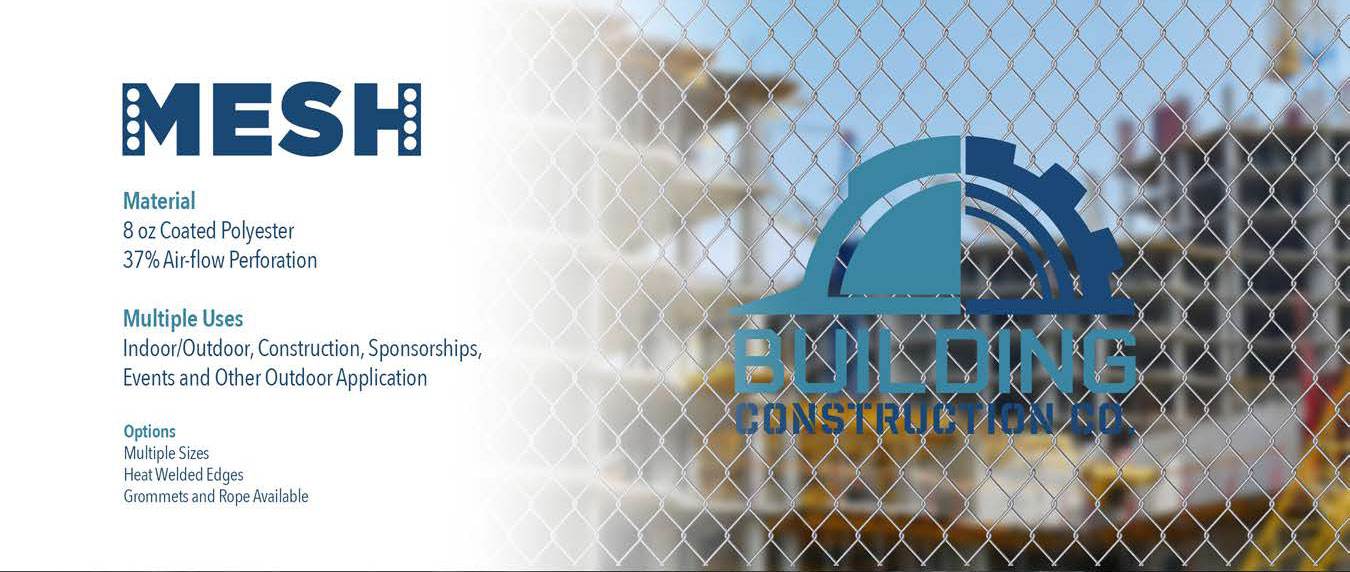
Mesh banner material contains small openings that allow some air to pass through the graphic, making it better suited than solid banner material for many fences, scaffolds, and open outdoor structures.
The Sign Catalog produces mesh banners from print-ready artwork in custom sizes and panel layouts, with finishing selected for the mounting surface, wind exposure, and expected display period.
Product details
Mesh Banner Features
A practical option for outdoor graphics where airflow and reduced wind resistance are important.
Perforated Construction
- Open structure allows part of the wind to pass through the banner
- May reduce loading compared with a similarly sized solid banner
- Perforation level affects print density, transparency, and airflow
Outdoor Finishing
- Hems, grommets, or reinforced edges may be available by project
- Finishing should be selected for the banner size and support system
- Mounting points should distribute tension evenly across the banner
Large-Format Production
- Suitable for long fence runs and larger exterior graphics
- May be divided into panels for production, handling, and installation
- Full-color printing from properly prepared artwork
Common uses
Where Mesh Banners Work Well
Mesh banners are most effective on open structures where solid graphics would create excessive wind resistance.
Construction Fencing
Project branding, site information, perimeter graphics, temporary screening, and directional messaging.
Sports Fields and Venues
Sponsor graphics, fence banners, field identification, event branding, and perimeter advertising.
Outdoor Events
Temporary perimeter signage, sponsor displays, event identification, and graphics in exposed open areas.
Installation planning
Mesh Reduces Wind Load, but Does Not Eliminate It
The support structure, installation method, fastening pattern, banner size, and local conditions must all be reviewed.
Support Structure
- Confirm the fence, frame, scaffold, or railing can support the installation
- Do not attach banners to unstable or damaged structures
- Obtain required site, property, or engineering approvals
Fastening and Tension
- Use enough fastening points for the banner dimensions and site exposure
- Distribute tension evenly instead of overloading isolated corners
- Avoid excessive tension that may damage hems, grommets, or fencing
Inspection and Weather
- Inspect fastening points and banner edges throughout the display period
- Remove or secure loose, torn, or damaged banners promptly
- Temporary removal may be necessary during severe weather
Artwork preparation
Design for Distance and Perforation
The mesh pattern and outdoor viewing distance affect how fine details appear.
Readable Design
- Use large text and strong contrast
- Avoid relying on very fine lines or small details
- Keep critical content away from seams, hems, and grommet areas
- Review readability at the expected viewing distance
Panel Layout
- Provide the total installed width and height
- Identify fence posts, gates, openings, and panel breaks
- Allow for overlaps, gaps, or alignment between separate panels
- Confirm whether graphics must continue across multiple sections
Quote preparation
Information to Include With Your Request
These details help us recommend the right panel layout, finishing, and installation approach.
Banner Specifications
- Total installed width and height
- Quantity of each design or panel set
- Artwork and required panel alignment
- Preferred material specification, when known
Site and Installation
- Fence, scaffold, frame, railing, or other support type
- Wind exposure and expected display duration
- Required hems, grommets, reinforced edges, or panel breaks
- Installation height, access, and site restrictions
Start your order
Request a Mesh Banner Quote
Share your fence or frame dimensions, artwork, panel layout, finishing requirements, and site conditions. We will review the project and recommend a mesh banner setup suited to the installation.