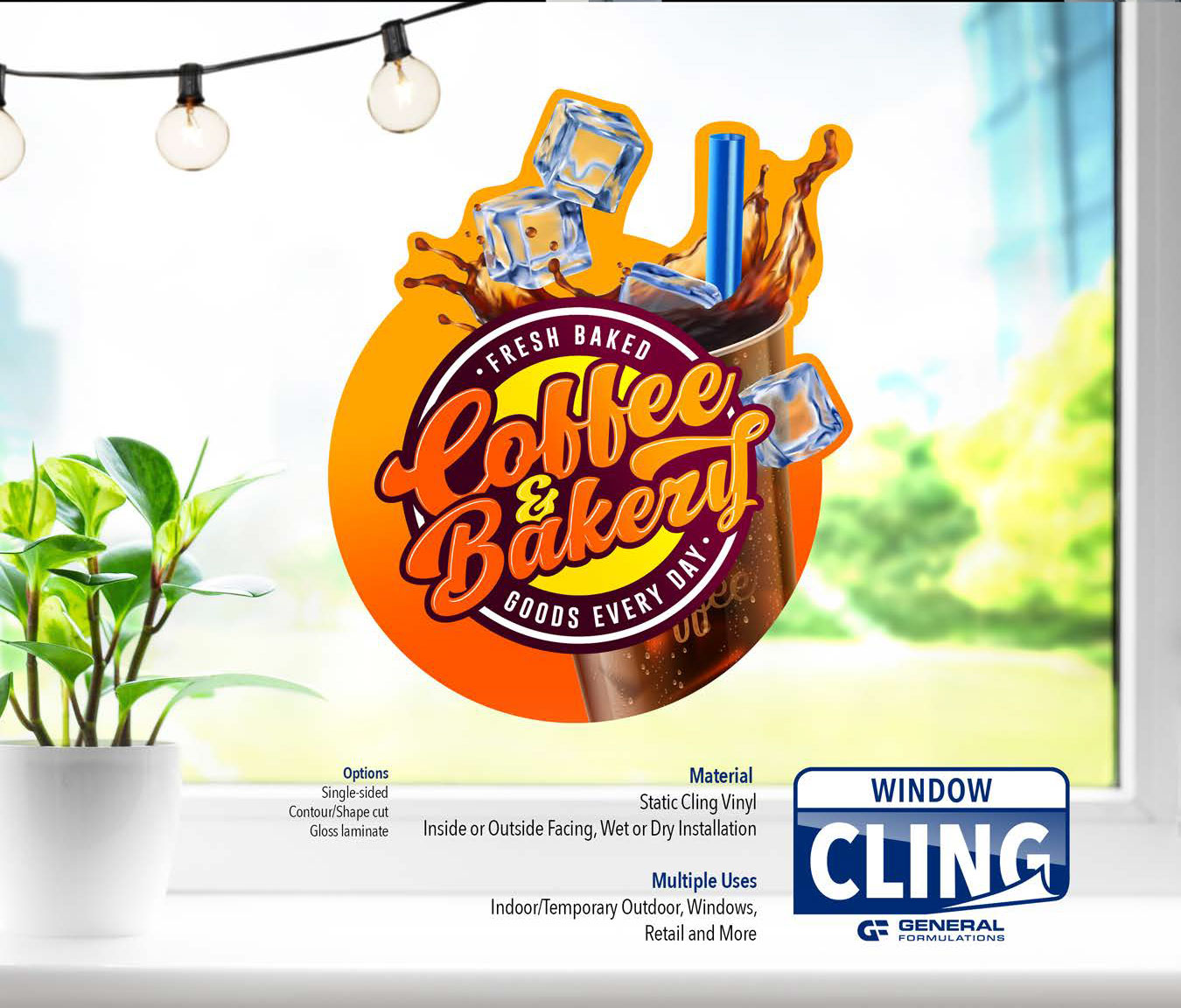
Non-adhesive window graphic
Static Cling Graphics for Temporary Window and Glass Displays
Window cling uses a non-adhesive static-cling material that can attach to compatible smooth glass and polished surfaces for temporary promotions, seasonal messaging, and frequently changed displays.
The Sign Catalog produces custom window clings from print-ready artwork in clear or white constructions, with printing, white ink, cutting, and installation orientation selected for the intended glass and viewing conditions.
Product details
Window Cling Features
A simple graphic format for smooth glass surfaces where permanent adhesive is unnecessary.
Non-Adhesive Construction
- Clings through material contact rather than pressure-sensitive adhesive
- Commonly used on smooth, clean glass and similar polished surfaces
- Performance depends on surface cleanliness, flatness, temperature, and material condition
Clear and White Options
- Clear cling can preserve visible glass around the printed design
- White cling provides a more opaque background for stronger color contrast
- White ink or reverse-printing strategies may be available for selected clear applications
Custom Printing and Cutting
- Full-color printing from print-ready artwork
- Rectangular pieces or contour-cut shapes may be available
- Sizes should be matched to the window, door, case, or display area
Common uses
Where Window Cling Works Well
Window cling is best suited to short-duration interior or protected displays on smooth, compatible surfaces.
Retail Windows
Seasonal sales, temporary offers, product launches, hours, campaign messages, and frequently rotated promotions.
Interior Glass
Office windows, glass partitions, display cases, doors, and temporary informational graphics without permanent adhesive.
Events and Pop-Ups
Temporary branding, sponsor messages, event information, registration graphics, and short-term activation signage.
Surface compatibility
Use Only on Smooth, Compatible Surfaces
Window cling requires close, even contact with the surface and may not perform reliably on textured, porous, dirty, or irregular materials.
Potentially Suitable Surfaces
- Clean, smooth, flat glass
- Selected polished acrylic, plastic, and metal surfaces
- Interior windows, doors, display cases, and partitions
- Surfaces tested with the exact cling material before full use
Surfaces Requiring Caution
- Textured, etched, frosted, porous, curved, or uneven surfaces
- Dirty, wet, oily, dusty, cold, or heavily coated glass
- Exterior locations exposed to wind, rain, or major temperature changes
- Surfaces with specialty coatings, films, or unknown treatments
Appearance planning
Choose the Correct Viewing Side and Material
Clear and white clings behave differently depending on whether the graphic is viewed through the glass or from the installation side.
First-Surface Installation
- Graphic is applied to the same side from which it is viewed
- Useful for interior-facing windows and display cases
- Artwork generally prints in its normal orientation
- Surface exposure and handling should be considered
Second-Surface Installation
- Graphic is applied inside the glass and viewed through it
- Can protect the printed surface from exterior handling and weather
- Artwork may require mirrored printing and white backing
- Glass tint, glare, and reflections may alter the final appearance
Installation
Cleanliness and Full Surface Contact Matter
Dust, oils, fingerprints, trapped air, and edge curl can reduce cling performance and visual quality.
Preparation
- Clean the surface with a compatible residue-free method
- Remove dust, grease, fingerprints, and old adhesive residue
- Allow the surface to dry completely before installation
Application
- Position the cling carefully before smoothing it into place
- Work from the center outward to reduce trapped air
- Press all edges and corners into full contact with the glass
Inspection
- Check for edge lift, wrinkles, bubbles, and incomplete contact
- Reposition carefully if the material has not been stretched or contaminated
- Remove damaged or distorted clings from service
Reuse and storage
Reuse Depends on Handling and Material Condition
Some window clings can be removed and reapplied, but reusability should not be guaranteed without considering contamination, stretching, age, and storage.
Removal
- Lift an edge carefully without stretching or creasing the material
- Keep the cling face and contact surface clean during handling
- Remove slowly to avoid distortion
Storage
- Store flat against a clean release liner or smooth protective sheet
- Keep away from dust, heat, moisture, and direct sunlight
- Do not fold, crease, or tightly roll small pieces
Reapplication
- Clean both the cling and installation surface before reuse
- Inspect for stretched edges, contamination, cracks, or loss of cling
- Replace material that no longer lies flat or adheres evenly
Artwork preparation
Prepare Files for Clear, White, and Reverse Printing
The artwork setup depends on the cling color, viewing side, white ink, and cut shape.
Graphic Setup
- Confirm clear or white material
- Identify first-surface or second-surface viewing
- Clearly define white ink, transparent areas, and cut paths
- Mirror artwork only when required by the installation orientation
File Quality and Trim
- Provide artwork at the correct finished dimensions
- Use adequate resolution for the intended viewing distance
- Include bleed and safe areas for trimming or contour cutting
- Convert or package fonts and linked assets where required
Quote preparation
Information to Include With Your Request
These details help us recommend the correct cling material, printing, white ink, cutting, and installation orientation.
Graphic Specifications
- Finished width and height
- Quantity of each design or size
- Clear or white cling preference
- Rectangular pieces or contour-cut shapes
Surface and Use
- Glass, acrylic, display case, door, or other surface
- First-surface or second-surface installation
- Indoor, protected, or exterior location
- Expected display period, reuse expectations, and staff installation needs
Start your project
Request a Window Cling Quote
Share your sizes, quantities, artwork, surface details, clear or white preference, and viewing orientation. We will review the project and recommend an appropriate window-cling setup.