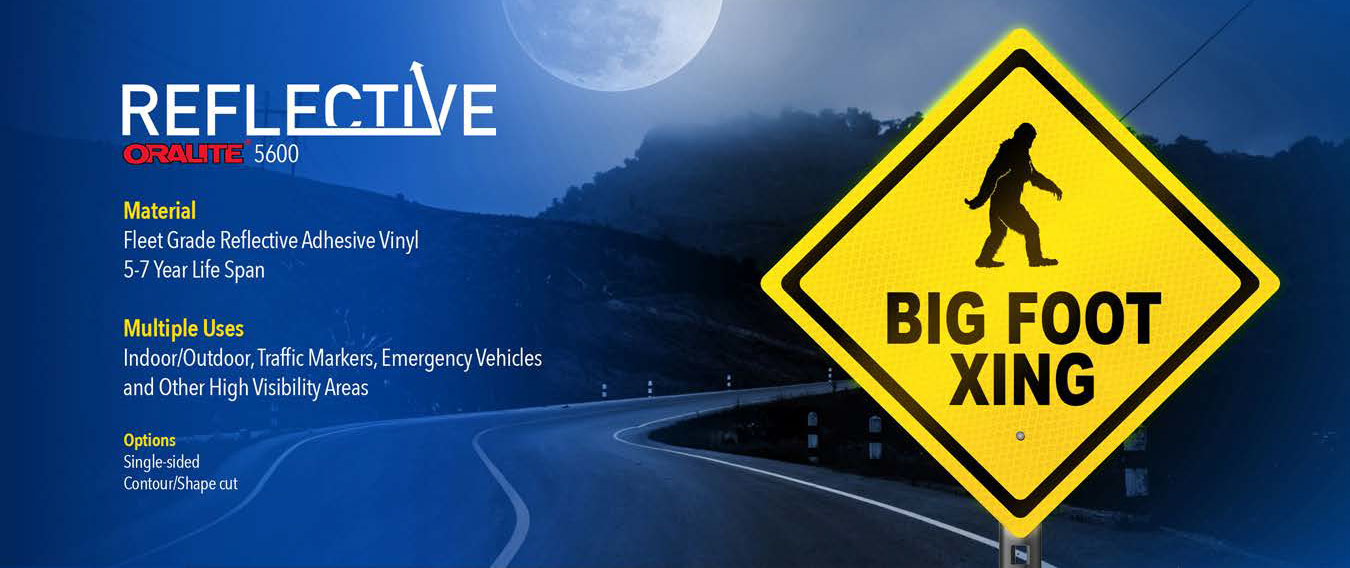
Reflective graphic film
High-Visibility Graphics for Vehicles, Signs, and Low-Light Environments
Reflective vinyl is designed to return part of the incoming light toward its source, helping graphics become more noticeable when illuminated by headlights or other directed light.
The Sign Catalog produces reflective graphics from print-ready artwork, with the exact film, laminate, color, cutting, and installation method selected for the intended surface, visibility goal, and service environment.
Product details
Reflective Vinyl Features
A specialized film family for applications where nighttime recognition or enhanced low-light visibility is important.
Retroreflective Performance
- Returns a portion of directed light toward the light source
- Can improve recognition when illuminated at night or in low light
- Brightness, color, and viewing angle depend on the exact film grade
Exterior Construction
- Selected reflective films are intended for exterior signs and vehicle markings
- Compatible laminate and edge treatment depend on the product system
- Service life varies with film grade, color, orientation, climate, and maintenance
Custom Production
- Printed logos, striping, identification, and graphic elements
- Contour cutting may be available for decals and markings
- Reflective and non-reflective elements can be combined within a larger design
Common uses
Where Reflective Vinyl Works Well
Reflective graphics are useful where vehicles, equipment, signs, or directional information need added visibility under directed light.
Vehicle Markings
Fleet identification, safety accents, striping, unit numbers, logos, and selected conspicuity-related graphics.
Safety and Facility Signs
Warning signs, equipment identification, access points, property signs, and low-light facility messaging.
Wayfinding and Directional Signs
Directional panels, site identification, parking guidance, route markers, and other signs viewed after dark.
Material selection
Choose the Correct Reflective Film Grade
Reflective films are not interchangeable. Construction, brightness, conformability, color, certification, and intended use vary significantly.
Project Requirements
- Vehicle, rigid sign, equipment, architectural, or specialty use
- Flat surface, simple curve, rivets, channels, or complex contours
- Required color, brightness, viewing distance, and lighting conditions
- Expected service period and removal requirements
Compliance Requirements
- Identify any applicable federal, state, local, industry, or agency standard
- Provide required film classifications, colors, dimensions, and placement rules
- Do not assume a decorative reflective film satisfies regulated-signage requirements
- Use the current manufacturer documentation for the selected product
Surface compatibility
Confirm the Surface Before Production
Adhesion and appearance depend on substrate composition, condition, coating, geometry, temperature, and installation technique.
Potentially Suitable Surfaces
- Smooth, clean, properly prepared painted metal
- Compatible rigid sign panels and selected plastics
- Flat or simply curved surfaces within the film’s intended capability
- Substrates approved through product documentation or testing
Surfaces Requiring Caution
- Textured, porous, oxidized, contaminated, or damaged surfaces
- Fresh paint, failing coatings, rust, body filler, or repaired vehicle panels
- Deep channels, compound curves, sharp recesses, and unapproved plastics
- Areas exposed to fuel, chemicals, abrasion, extreme heat, or repeated pressure washing
Design planning
Design for Both Day and Night Viewing
Reflective color and contrast can look different under daylight, ambient light, and direct illumination.
Daytime Appearance
- Review color, brand consistency, contrast, and overall legibility
- Keep text large enough for the expected viewing distance
- Avoid relying only on reflectivity to create readable contrast
Nighttime Appearance
- Consider headlight angle, observer position, and viewing distance
- Test critical colors and details under representative illumination
- Use simple shapes and strong contrast for essential information
Printed Reflective Graphics
- Printing may reduce or alter reflective brightness
- Ink coverage, laminate, and color density affect the final result
- Critical performance requirements should be verified with the exact finished system
Installation and care
Protect Edges, Surfaces, and Reflective Performance
Correct preparation, pressure, heat, cleaning, and inspection help maintain adhesion and visibility.
Preparation
- Clean and dry the surface using methods compatible with the substrate
- Remove wax, oil, silicone, oxidation, and adhesive residue
- Test adhesion when surface history or compatibility is uncertain
Application
- Install within the manufacturer’s recommended temperature range
- Use appropriate pressure, heat, overlap, and edge-sealing methods
- Avoid overstretching films not designed for complex conformability
Inspection and Cleaning
- Inspect edges, seams, and high-wear areas regularly
- Use non-abrasive cleaning methods compatible with the film
- Replace damaged, lifting, heavily worn, or obstructed markings promptly
Quote preparation
Information to Include With Your Request
These details help us select the correct reflective film, printing, laminate, cutting, and installation approach.
Graphic Specifications
- Finished width and height
- Quantity of each design or size
- Printed graphics, striping, lettering, or contour-cut markings
- Required colors, brightness, standards, and artwork
Surface and Environment
- Vehicle, sign panel, equipment, or other substrate
- Surface composition, coating, geometry, and condition
- Indoor, covered exterior, or exposed exterior location
- Expected service period, cleaning, abrasion, and removal requirements
Start your project
Request a Reflective Graphics Quote
Share your sizes, quantities, artwork, surface details, lighting conditions, and any required standards. We will review the application and recommend an appropriate reflective film system.