
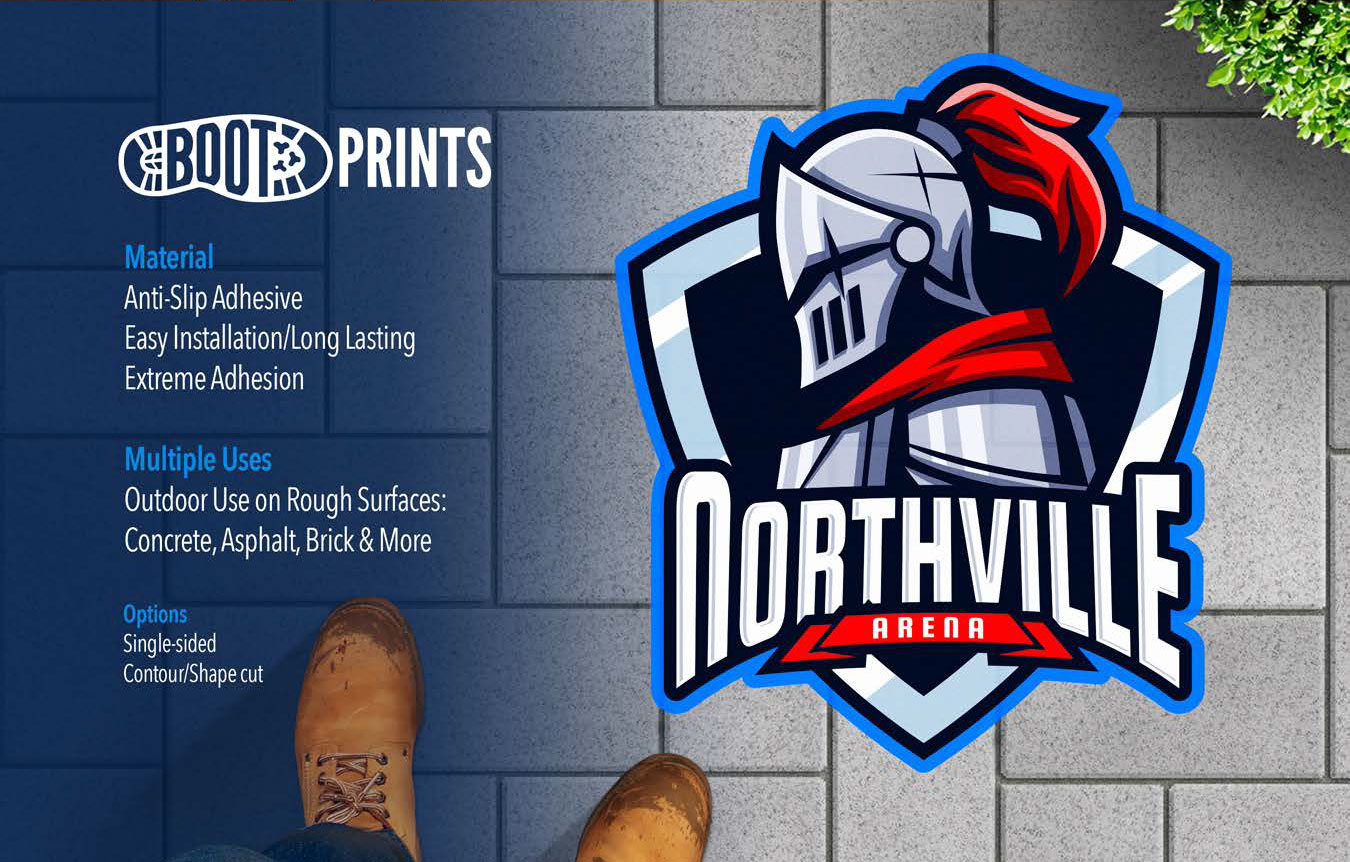
Floor graphic product
Boot-Shaped Floor Graphics for Wayfinding and Promotions
Boot print floor graphics create a visible path across compatible finished floors for wayfinding, promotions, event traffic, and temporary directional messaging.
The Sign Catalog produces printed boot-shaped graphics from print-ready artwork, with material, laminate, adhesive, size, and spacing selected for the floor type, traffic level, and expected display period.
Product details
Boot Print Graphic Features
A specialized floor-graphic format for spaces that need clear directional cues and branded visual impact.
Floor-Rated Surface
- Uses a floor-graphic system selected for the intended environment
- Traction performance depends on the exact laminate, testing, wear, cleaning, and floor conditions
- Slip-resistance claims should be confirmed for the specific product system
Custom Shapes and Sizes
- Boot shapes, arrows, circles, or custom outlines may be produced
- Full-color printing from print-ready artwork
- Scale and spacing can be planned around traffic flow and viewing distance
Temporary Installation
- Designed for compatible smooth, clean, finished floors
- Display period should match the selected adhesive and environment
- Removal characteristics vary by floor type, coating, age, and condition
Common uses
Where Boot Print Graphics Work Well
Boot-shaped graphics are useful when a path needs to be obvious, memorable, and easy to follow.
Retail Pathways
Guide shoppers toward departments, featured products, promotions, checkout areas, or temporary campaign displays.
Events and Trade Shows
Lead visitors toward booths, registration, exhibits, entrances, exits, and temporary activity zones.
Wayfinding and Operational Messaging
Mark preferred routes, queue directions, pickup areas, service points, and other temporary navigation cues.
Floor compatibility
Test the Floor Before Production
Adhesion, removability, and safety depend on the exact floor material, finish, condition, cleaning products, and environment.
Potentially Suitable Floors
- Smooth, clean, dry, well-bonded finished flooring
- Selected sealed concrete, tile, vinyl, laminate, and coated surfaces
- Areas with predictable pedestrian traffic and regular inspection
- Surfaces approved through a representative adhesion test
Floors Requiring Caution
- Textured, porous, dusty, cracked, damaged, or uneven surfaces
- Waxed, polished, freshly coated, dirty, wet, greasy, or chemically treated floors
- Carpet, loose flooring, grout-heavy tile, or unstable coatings
- Areas exposed to carts, forklifts, heavy abrasion, standing water, or extreme temperature changes
Path planning
Plan Spacing, Direction, and Accessibility
Floor graphics should support navigation without creating visual confusion or interfering with accessible routes.
Spacing and Orientation
- Keep spacing consistent enough for visitors to follow the route
- Orient each shape toward the intended direction of travel
- Account for turns, intersections, doors, and queue areas
Accessible Routes
- Do not obstruct required clear widths or accessible paths
- Avoid placing graphics where they may distract from permanent safety markings
- Use floor graphics as supplemental wayfinding, not the sole method of communication
Visual Readability
- Use strong contrast against the floor
- Keep text brief and large enough to read while walking
- Avoid overly detailed artwork that becomes unclear underfoot
Installation and maintenance
Inspect Floor Graphics Throughout the Display Period
Edges, corners, wear, moisture, and contamination should be checked regularly in active pedestrian areas.
Installation
- Clean and dry the floor using methods compatible with the surface and adhesive
- Install within the product’s recommended temperature range
- Apply firm, even pressure across the full graphic
Routine Inspection
- Check edges and corners for lifting, curling, or damage
- Remove and replace graphics that no longer lie flat
- Monitor wear in high-traffic, wet, or heavily cleaned areas
Cleaning and Removal
- Use cleaning products compatible with the printed surface and floor
- Avoid aggressive scrubbing, steam, or harsh chemicals unless approved
- Remove carefully and check for residue or floor-coating damage
Quote preparation
Information to Include With Your Request
These details help us recommend the correct floor-graphic system, size, spacing, and installation plan.
Graphic Specifications
- Finished size of each boot print or shape
- Quantity and number of unique designs
- Print-ready artwork and required colors
- Desired path length, spacing, and orientation
Floor and Environment
- Floor material, finish, age, condition, and cleaning routine
- Indoor, covered, or exposed location
- Expected display period and pedestrian traffic level
- Installation responsibility, deadline, and removal requirements
Start your project
Request a Boot Print Floor Graphics Quote
Share your artwork, floor photos, floor material, traffic conditions, dimensions, quantity, path layout, and expected display period. We will review the project and recommend an appropriate floor-graphic system.